Saba Soleymani: Painting Visibility for the Voiceless
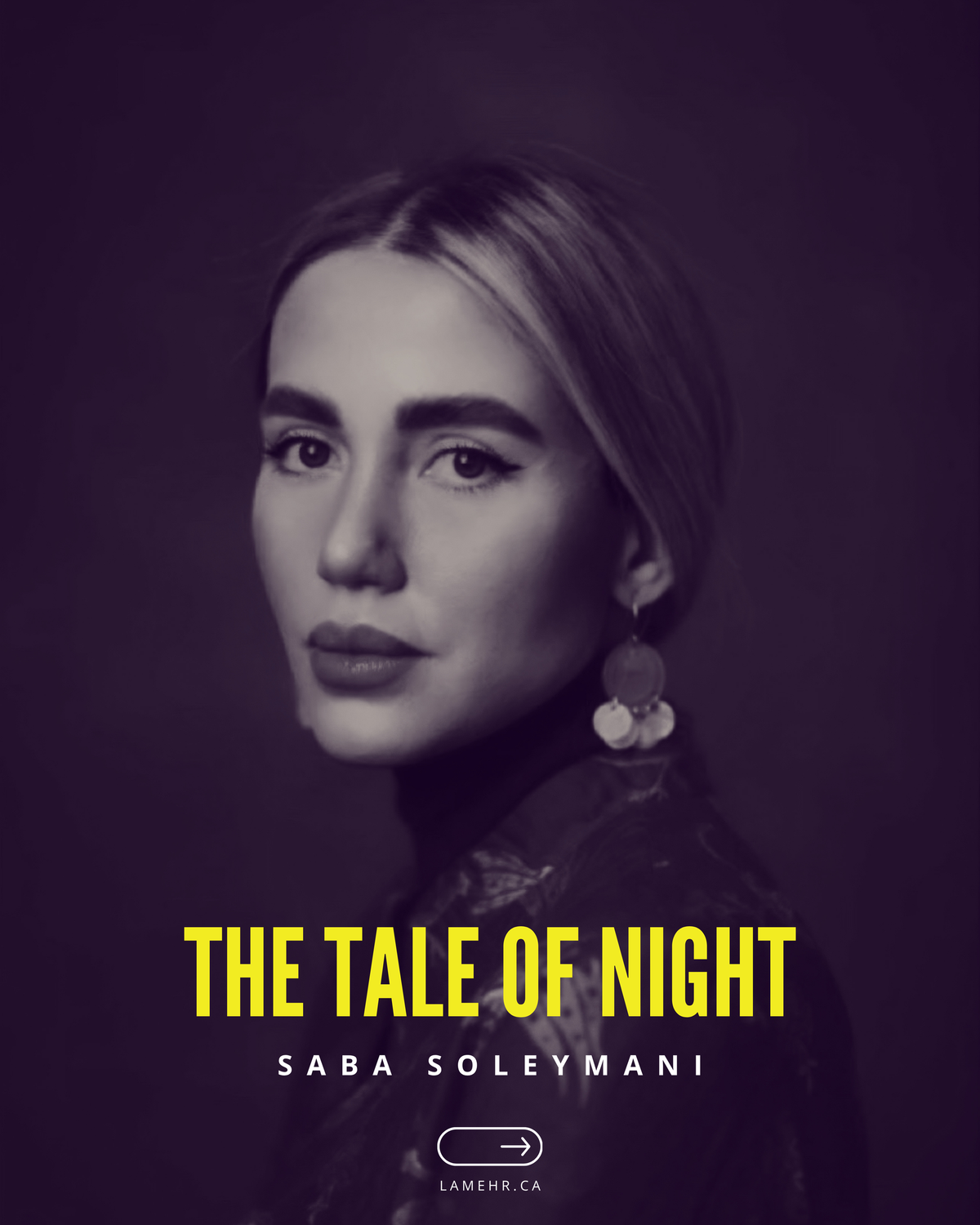
By Ehsan Mansouri
There is a quiet but undeniable force running through the work of Saba Soleymani — a refusal to let the overlooked remain invisible. A painter and illustrator with two decades of professional experience both inside Iran and on the international stage, Soleymani has built a practice rooted in a single, urgent conviction: that ordinary lives deserve to be seen, and that the act of making them visible is itself a political and humanitarian gesture.
Her canvases do not traffic in spectacle. They do not reach for the monumental or the mythological. Instead, they turn toward the unremarkable — the woman waiting at a bus stop, the caregiver whose name no one will remember, the daughter quietly holding a household together — and insist, with extraordinary tenderness and technical precision, that these lives are the ones that matter most. In doing so, Soleymani has established herself as one of the most emotionally and intellectually rigorous voices to emerge from the Iranian diaspora art scene in recent years.
Three years ago, Soleymani was forced to leave Iran. She now lives and works in Kassel, Germany, as an artist in exile. That displacement — marked by rupture, structural limitation, and the particular grief of a geography left behind under duress — has not narrowed her vision. If anything, it has expanded it. Distance has given her both perspective and urgency. Her work now speaks not only to the Iranian experience, but to the broader and increasingly universal condition of the displaced, the silenced, and the structurally invisible.
A Practice Built on Witness
To understand Soleymani's artistic trajectory is to understand something essential about how art functions under pressure. In Iran, she painted women — not as symbols, not as allegories, but as specific, embodied human beings navigating the textures of daily life under an authoritarian system that has long sought to regulate, diminish, and erase them. These were not comfortable paintings. They were acts of witness, and they were received as such by authorities who responded with interrogations.
Soleymani has spoken openly about being subjected to repeated questioning by Iranian authorities because of her paintings connected to the Woman, Life, Freedom uprising — the mass protests that swept Iran following the death of Mahsa Amini in September 2022. In an interview with Zeta Italy magazine, conducted at Kassel's historic Hugenottenhaus and photographed by artist and photographer Helga Tvorcha, she reflected on what it means for art to become a tool of resistance.
"Art can become a tool of resistance," she said, "and it can create a larger, more impactful voice — one that is not welcomed by oppressive structures and therefore becomes a source of fear for them."
That fear, paradoxically, is a testament to the seriousness of what she makes. When a state apparatus finds a painter threatening enough to interrogate, it confirms that the painter is doing something right. For Soleymani, this was not a revelation so much as a clarification — a moment that sharpened her understanding of why her work exists and what obligations it carries.
Ordinary People: The Heroines of Their Own Lives
The series Ordinary People – The Heroines of Their Own Lives stands as one of Soleymani's most fully realized and philosophically coherent bodies of work. It is a sustained meditation on heroism — on who gets to be recognized as heroic, whose stories are preserved, and whose are quietly absorbed into the silence of history.
The protagonists of this series are women who exist far from public attention: mothers, daughters, workers, caregivers, students, neighbors, and dreamers. They are neither mythological figures nor historical icons. They carry no crowns or swords. What they carry instead are the textures of lived experience — the weariness and warmth, the small dignities and quiet perseverances that constitute the real substance of human civilization.
"In my paintings, these women are not depicted as idealized or flawless symbols, but as real and tangible human beings," Soleymani explains. "Their facial expressions, gestures, and the spaces that surround them reflect the reality of contemporary life — from resilience in the face of challenges to the warmth of human relationships and a quiet, unassuming persistence."
What makes this series remarkable is not merely its subject matter but its underlying philosophical argument. Soleymani is actively interrogating and dismantling traditional frameworks of heroism — those inherited from history books, mythology, and nationalist narratives that have consistently centered men, exceptional deeds, and public visibility as the prerequisites for being remembered. She proposes a counter-framework: one in which heroism is measured not by the scale of a single act, but by the accumulated weight of daily endurance, care, and hope.
"What particularly interests me is the act of making visible the strength hidden within ordinary life," she writes, "a strength that often goes unnoticed, yet continues to move the world forward."
This is painting as philosophical reclamation. By placing ordinary women at the center of her canvases, Soleymani is not merely celebrating them — she is arguing for a fundamental reordering of what we consider worthy of artistic and historical attention. It is a series that invites viewers to sit with a discomforting but necessary question: if history is made by countless everyday acts rather than solely by great figures, why have our cultural institutions been so reluctant to reflect that truth?
Bodies: A Collaborative Installation in Kassel's Urban Fabric
If Ordinary People represents the intimate, singular dimension of Soleymani's practice, her current collaborative project Bodies operates at an entirely different scale — one that is public, participatory, and deliberately fluid.
Developed in partnership with sculptor Sara Rahanjam, Bodies is an artistic-research project that positions the human body as the primary vessel for narrative. At its core are two life-sized fabric figures — a woman and a man — designed not for gallery walls but for the open, uncontrollable terrain of public space. These figures will be placed across Kassel's streets, squares, and transitional zones, generating meaning through direct, unscripted encounters with the city and its inhabitants.
"These figures do not represent specific individuals," Soleymani explains. "Rather, as borderless bodies, they articulate shared human experiences across diverse social and geographical landscapes."
The conceptual elegance of Bodies lies in precisely this refusal of the particular. By declining to assign the figures a specific identity, nationality, or biography, Soleymani and Rahanjam create a kind of relational openness — an invitation for anyone who encounters the installation to locate themselves within it. A Syrian refugee, a German retiree, a student from West Africa, a Turkish shopkeeper: each may bring an entirely different interpretive framework to the figures, and each reading is equally valid. The figures become mirrors, not monuments.
The choice of Germany — and Kassel specifically — as the project's inaugural site is not incidental. It is deeply, deliberately meaningful. For one of the artists, Germany represents the country that offered the possibility of a new beginning following forced displacement from Iran. For the other, it is a destination finally reached after a prolonged and harrowing period of crisis and conflict. Germany is thus simultaneously a refuge, a resting point, and a launching pad for a narrative the artists intend to carry into multiple geographies.
"This specific context transforms Germany into a significant starting point for a narrative that is destined to persist and expand into other geographies," Soleymani notes.
Methodology and the Unmediated Encounter
What distinguishes Bodies from conventional public art installations is its radical commitment to the unmediated encounter. Rather than framing the work within the interpretive architecture of a museum or gallery — with wall texts, guided tours, and the implicit authority of institutional validation — Soleymani and Rahanjam bring their figures directly into the lived environment of the city, allowing meaning to emerge organically from contact with real people in real time.
The methodological framework prioritizes spontaneity and documentation. Every interaction between the figures and the public is recorded, building a growing archive of reactions, gestures, conversations, and moments of recognition or confusion. This documentary layer is not supplementary to the work — it is constitutive of it. The entire process, in the artists' own framing, functions as "a living, dynamic, and transforming laboratory."
Interventions during the current residency are concentrated around Dock 4 and Palais Bellevue — spaces within Kassel's urban fabric that carry their own layered histories of cultural exchange and civic life. The focus on these areas reflects a deliberate interest in exploring the interplay between body, movement, and belonging within a genuinely multicultural environment, where questions of identity and integration are not abstract but immediate.
"Our approach focuses on creating direct, unmediated, and unexpected encounters with people in urban spaces," Soleymani explains. "These activities are designed to instinctively draw the audience into the narrative, transforming passive passersby into active participants of the artistic event."
The figures in Bodies function, in this sense, as what Soleymani describes as voices — voices that evoke experiences of suppression, exile, inequality, and voicelessness. While the Iranian context is central to understanding the personal and political urgency behind the project, the work deliberately transcends any single geography. Its ambitions are universal: to address the shared human condition in a contemporary world defined by migration, displacement, and the fragmentation of belonging.
Residency and Collective Reflection
The culmination of the Bodies residency in Kassel is envisioned not as a fixed endpoint but as a threshold — an opening into ongoing dialogue. The final presentation may take the form of a public showcase, a documentary exhibition of the recorded interactions, or a hybrid format blending live performance with structured open dialogue in what the artists describe as Reflexion. Whichever form it ultimately takes, the goal remains consistent: to foster a space for collective reflection on the overlooked experiences of contemporary life, while contributing meaningfully to the accessibility, inclusivity, and cultural vitality of Kassel's public institutions.
This collaborative dimension of the project is itself significant. Soleymani and Rahanjam — two Iranian women artists whose life and artistic trajectories have been profoundly shaped by geopolitical upheaval — bring to their partnership not only complementary disciplines (painting and sculpture) but a shared biography of displacement that infuses the work with an authenticity no amount of technical skill alone could produce. Their collaboration is, in a very real sense, the first layer of the project's meaning, before a single figure is placed on a single street.
The Broader Significance
Saba Soleymani's work arrives at a moment when questions of visibility, representation, and the politics of who gets to be seen are more pressing than ever. Across the world, authoritarian structures continue to suppress dissent, silence women, and render entire populations invisible through policy and violence. At the same time, the global diaspora of artists, intellectuals, and activists forced out of their home countries is producing some of the most vital and necessary cultural work of our era.
Soleymani belongs to this tradition — artists who carry their homelands with them not as nostalgia but as unfinished business, whose displacement has not severed their engagement with the societies they left but deepened and complicated it. Her work asks us to consider what we lose when voices are silenced, and what it costs — politically, culturally, humanly — to let the ordinary go unrecorded.
"History and society are not created solely by great figures," she writes, "but by countless everyday acts."
In Kassel's streets, on painted canvases, in documented encounters with strangers and citizens, Saba Soleymani is ensuring that some of those acts — and the women who perform them — will not be forgotten.
#SabaSoleymani #WomanLifeFreedom #ArtAsResistance #IranianArtists #ExileArt #TheTaleOfNight #ContemporaryIllustration #WomenInArt #Lamher